What Goes Into the Price of a Kitchen Remodel
What Goes Into the Price of a Kitchen Remodel
A kitchen remodel is one of the most significant investments a homeowner can make. In Washington, DC and the surrounding region, it is also one of the most misunderstood.
Many homeowners begin with a number they have heard from a friend or seen online. The problem is that kitchen remodeling prices are not driven by square footage alone. They are driven by scope, planning, materials, structural conditions, and the level of detail involved.
At PACE Design & Construction, we believe price clarity begins with understanding what truly drives the investment.
Design and Planning
Every successful kitchen remodel starts with design. This includes layout development, architectural drawings, structural evaluation, and detailed scope writing.
In older DC homes, especially rowhouses and early 20th-century colonials, walls may not be square, framing may need reinforcement, and utilities may be outdated. Proper planning identifies these realities before construction begins.
Design is not a line item to minimize. It is what prevents costly changes mid-project.
Demolition and Structural Work
Many kitchens involve more than cosmetic updates. Removing walls, reconfiguring layouts, or opening a kitchen to adjacent living spaces requires structural analysis.
Load-bearing walls often require beams. Floors may need reinforcement to support stone surfaces or large islands. In historic neighborhoods, additional review may be required before exterior changes are approved.
Structural modifications are often one of the largest price variables because they are specific to each home.
Cabinetry
Cabinetry typically represents one of the largest portions of a kitchen budget. The difference between stock, semi-custom, and full custom cabinetry significantly affects price.
Construction quality, wood species, finish systems, hardware, and interior organization all influence price. In high-end remodels, cabinetry alone can represent a substantial percentage of the overall investment.
At PACE, we guide clients through options that align with both function and longevity.
Countertops and Surfaces
Natural stone, engineered quartz, solid surface materials, and specialty finishes each carry different price points.
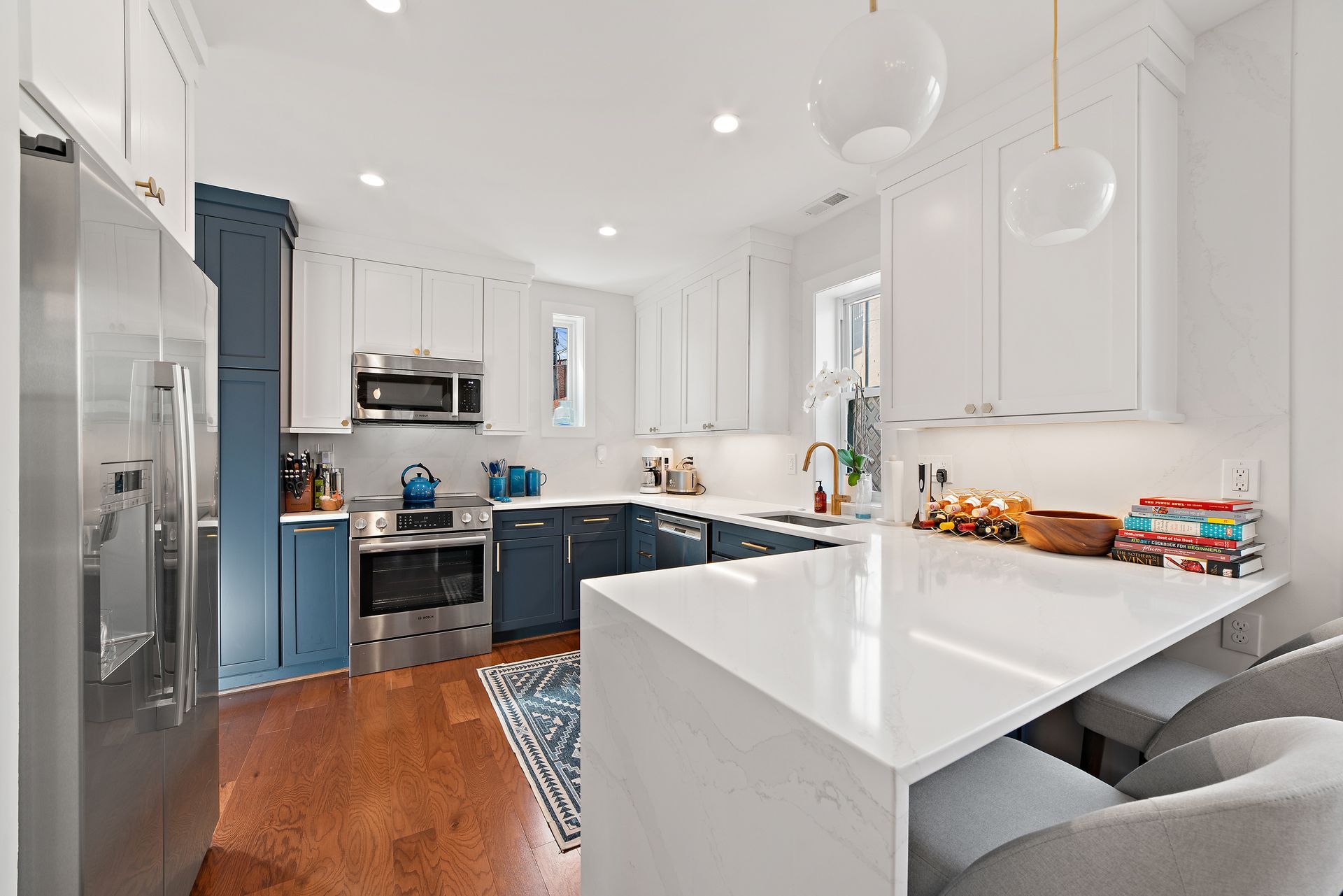
Edge profiles, waterfall details, full-height backsplashes, and integrated sinks all add complexity and cost. Surface selections are not just aesthetic decisions. They affect fabrication, installation labor, and timeline.
Appliances
Appliance prices vary widely. Standard packages differ dramatically from professional-grade systems with panel-ready refrigeration, induction cooking, steam ovens, and built-in coffee systems.
Electrical upgrades are often required to support modern appliances. Gas line modifications or ventilation upgrades may also be necessary.
Flooring
Kitchen flooring must balance durability, moisture resistance, and design continuity. Hardwood refinishing, tile installation, or luxury engineered products each carry different labor and material prices.
In DC homes, leveling older subfloors is often required before new finishes are installed.
Mechanical, Electrical, and Plumbing
Behind the walls is where much of the real work happens.
Relocating sinks, gas lines, or drains adds plumbing costs. Upgrading service panels or adding dedicated appliance circuits increases electrical scope. HVAC adjustments may be needed to accommodate new layouts or expanded spaces.
These components are rarely visible in finished photos, but they are essential to a properly functioning kitchen.
Permits and Inspections
In Washington, DC and surrounding jurisdictions, permits are typically required for kitchen remodels that involve structural, electrical, plumbing, or mechanical changes.
Permitting fees, inspections, and compliance with local codes are part of the overall investment. Skipping this process may seem less expensive upfront but carries long-term risk.
Project Management and Labor
A well-run project includes scheduling, trade coordination, inspections, material procurement, and daily oversight.
Professional carpenters, licensed electricians, licensed plumbers, tile installers, and finish crews each contribute specialized expertise. Quality craftsmanship requires skilled labor, and skilled labor carries cost.
Transparent project management reduces delays, errors, and rework.
Allowances and Scope Clarity
One of the most common reasons kitchen remodel budgets escalate is vague scope definition.
Allowances may appear to reduce initial pricing, but they often lead to mid-project adjustments. A clearly defined scope with specific material selections creates more predictable outcomes.
At PACE, we focus on detailed planning before construction begins so clients understand where their investment is allocated.
What is the Price of a Kitchen Remodel in Washington, DC?
Kitchen remodel prices in the DC market vary widely based on size, structural changes, finish level, and appliance selection. A cosmetic refresh differs significantly from a full layout reconfiguration with structural modifications and high-end finishes.
The key is not starting with a number. The key is defining the scope.
Building with Confidence
A kitchen remodel is both a financial and lifestyle investment. When properly designed and executed, it improves daily living, increases long-term value, and enhances how a home functions.
At PACE Design & Construction, our design-build process prioritizes clarity, planning, and craftsmanship. We develop detailed scopes of work, realistic budgets, and construction strategies tailored to your home.
If you are considering a kitchen remodel in Washington, DC or the surrounding area, start with a conversation about scope and goals.