
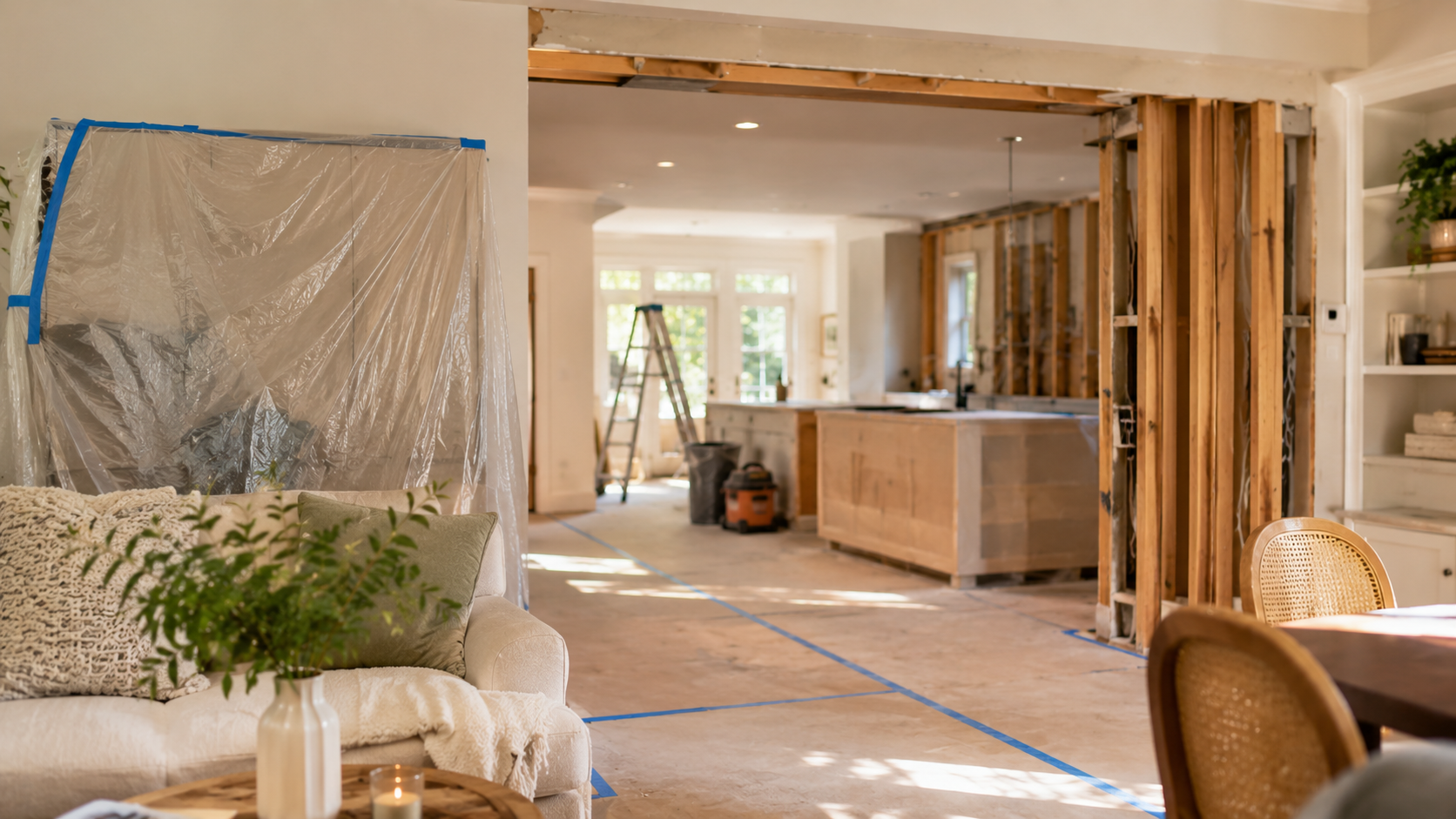
Your renovation plans might look fantastic on paper. Living through the work is another story. If you’re considering renovating a house while living in it, picture what a typical Tuesday might feel like with contractors arriving early and parts of your home temporarily out of use. You may be excited to watch the progress, yet still wonder how your household will manage the interruptions. How much of your normal routine can you realistically maintain?
At PACE, we help Washington, DC homeowners plan around the realities of construction as well as the finished result. We consider your daily routine and the work involved when exploring the most practical arrangements for your renovаtion. The right approach could make a bigger difference to your experience than you might expect.
Start by Understanding How Much of Your Home the Renovation Will Affect
Before deciding whether to stay home during your renovation, consider how much of your living space will be affected. Even a relatively small project can cause significant disruption if it involves an area your household relies on every day. Understanding where construction will take place and what will remain accessible gives you a better starting point for planning your living arrangements.
Consider Whether the Work Is Contained to One Area
A single-room renovation may be easier to live through when the rest of your home remаins functional. For example, remodeling one bathroom could be manageable if another full bathroom is available. A kitchen renovation requires more planning, particularly when cooking and cleanup facilities will be temporarily unavailable.
Location matters just as much as project size. Work affecting your main staircase or central hallway could interrupt access to several rooms, even if the construction area itself is relatively small. Think about the activities your household needs to maintain and whether alternative arrangements will be practical throughout the project.
Understand How Demolition and Structural Work Change the Situation
Substantial demolition or structural alterations can make remaining at home more complicated. These projects may require larger construction zones, restricted access, or temporary utility shutdowns. Your contractor should explain which areas can remain safely occupied and whether particular stages will require everyone to leave. In older Washington, DC homes, lead exposure also deserves attention. For covered work disturbing painted surfaces in pre-1978 housing, the EPA’s Lead Renovation, Repair and Painting Rule requires certified firms and lead-safe practices, including appropriate containment. Discuss these safety requirements before construction begins, especially if your household plans to remain nearby.
Establish Which Essential Rooms and Utilities Will Remain Available
Consider what your household needs to function comfortably each day. Will you have access to a working bathroom and somewhere to prepare meals? Can you maintain suitable sleeping arrangements and move safely between the rooms that remain in use?
Utilities deserve attention as well. Plumbing or electrical work in one area can affect services elsewhere in the house, while heating and cooling interruptions may influence whether staying is comfortable during certain seasons.
Ask your remodeling team to identify when essential rooms, utilities, or access routes will be unavailable. Having those periods clearly established in the construction schedule helps you decide whether to remain at home throughout the renovation or arrange temporary accommodation for the most disruptive stages.
How PACE Plans Renovations Around Your Living Arrangements
At PACE, we understand that renovating your home affects much more than the rooms being remodeled. Your daily routine matters, and we want you to know what to expect while construction is underwаy. Our design-build process allows us to consider your living arrangements alongside the project scope and construction schedule, helping you prepare for the work ahead.
We Start With the Scope and How You Use Your Home
We begin by understanding your existing home and what you’d like to change. During feasibility, we assess the areas involved and the extent of the proposed work. We also discuss how your household uses those spaces, particularly when the renovation involves essential rooms such as the kitchen or bathrooms. This helps us identify potential disruptions early and consider whether staying home could be practical.
For larger renovations, we explore how construction might affect your access to different parts of the house. We can discuss whether temporary accommodation deserves consideration before detailed planning progresses, giving you more time to prepare.
We Coordinate Construction Planning and Site Logistics
As we develop your home remodeling plans, we consider how the proposed work will be carried out. Our designers and builders coordinate construction sequencing with the project scope, helping us understand which areas may need to be unavailable at different stages.
During pre-construction, we also plan practical site arrangements, including access and deliveries, so we can organize how our team will work on your property. Where phased construction is feasible, we evaluate how the sequence may affect your living arrangements and the overall schedule. We want you to understand these considerations before work begins, particularly if you’re hoping to remain at home.
We Keep You Informed as the Renovation Progresses
Once construction begins, we maintain communication through project meetings and updates. We also use our client portal to support communication during project development. These channels help us discuss progress and upcoming activities that may affect how you use your home.
We recognize that existing conditions and construction requirements can sometimes change the planned sequence. When adjustments arise, we work to explain their implications and discuss what they mean for your household. Whether you’re remaining at home or arranging temporary accommodation, we want you to have the information needed to prepare for each stage of the renovation.
When Living at Home During a Renovation Can Work
Staying home during construction can be а practical option when the work is manageable and your household has enough space to continue its routine. However, sharing your home with an active construction project takes preparation. You’ll want to establish clear boundaries with your contractor and consider how the work will affect your everyday comfort before deciding to stay.
Keep the Construction Zone Separate From Living Areas
A clear separation between construction and occupied spaces is essential. Depending on the work involved, your contractor may install temporary barriers and protect pathways used to move materials through the house. You’ll also need to know which areas are restricted and how workers will access the construction zone without unnecessarily interrupting your living spaces.
Dust control deserves particular attention. The EPA recommends using appropriate containment and ventilation strategies to limit the spread of construction pollutants. Some work requires specialized safety procedures, so discuss the protective measures your contractor will use and whether remaining nearby is appropriate during particular activities.
Plan Around the Household’s Everyday Routine
Think about what a normal weekday looks like in your home and where construction could interfere. If you work remotely, regular drilling or contractor activity may make concentrating difficult. Households with young children or pets will also need secure separation from active work areas. Temporary meal preparation arrangements and alternative sleeping spaces can help when essential rooms are unavailable. Discuss expected working hours, daily access arrangements, and any particularly disruptive activities with your contractor beforehand. Even small adjustments to your routine can make staying home considerably more manageable.
The Limits of Staying Comfortable During Construction
Even with careful separation, you’ll still notice the renovation. Noise and dust can affect nearby rooms, and frequent contractor access may interrupt the privacy you’re accustomed to enjoying.
Consider how long these conditions will continue. Living with a temporary kitchen arrangement for a short period might feel reаsonable, while maintaining the same setup throughout a lengthy renovation could become exhausting.
Be realistic about your household’s tolerance for disruption. If the project involves several areas of your home, ask whether construction can be divided into stages that preserve usable living space. Phasing the work may offer another way to balance renovation progress with your everyday needs.
Can Phasing the Renovation Make Staying Home Easier?
If renovating your entire home at once sounds overwhelming, breaking the work into stages may give you more flexibility. A phased renovation allows certain areas to remain available while construction progresses elsewhere. However, the sequence needs careful planning to make sure your household can continue functioning and the work can proceed efficiently.
How a Phased Renovation Works
Phasing means dividing your renovation into planned stages, with work in one area reaching an agreed point before another begins. For example, you might renovate one bathroom while keeping another available for everyday use. This approach can be particularly helpful when remodeling different floors or separate sections of a larger home.
However, some construction activities need to happen together. Structural changes or work involving shared building systems may affect several areas simultaneously. Your contractor should identify these dependencies before establishing the construction sequence, so you know which spaces can realistically remain occupied.
Consider the Scheduling and Cost Tradeoffs
Phasing can influence your overall renovation timeline and construction budget. Completing work in separate stages may involve repeated site preparation, additional protective barriers, or more complicated trade scheduling. Certain activities also need careful sequencing to prevent later work from damaging newly finished rooms. These factors can affect labor efficiency and project costs, although the impact depends on your specific renovation. Ask your contractor to compare a phased approach with a more continuous construction schedule, including аny differences in cost and anticipated disruption.
Decide Whether the Home Will Remain Functional Between Phases
The biggest advantage of phasing is preserving usable living space. Before agreeing to a schedule, review how your household will function during each stage:
- Bathroom access: Will at least one working bathroom remain available?
- Kitchen availability: When will cooking and cleanup facilities be affected?
- Utilities: Could plumbing or electrical work interrupt services elsewhere?
- Movement through the house: Will essential rooms and entrances remain safely accessible?
Ask your contractor to identify when access will change and what temporary arrangements you’ll need. A completed bathroom might make the next phase easier to manage, but shared utilities could still create interruptions.
If the proposed sequence leaves your household without essential facilities for extended periods, temporary accommodation may be the more practical choice.
When Moving Out During a Renovation Makes More Sense
Sometimes, arranging temporary accommodation can make your renovation considerably easier to manage. If construction will affect much of your home or interrupt essential facilities, staying elsewhere may give your household a more comfortable routine. Before making that decision, consider which parts of the project will be most disruptive and whether you’ll need to leave for the entire renovation.
Recognize When the Renovation Will Disrupt Too Much of the House
Extensive whole-home remodeling or major structural alterations can make continued occupancy impractical. If several essential rooms become unavailable simultaneously, you may struggle to maintain a reasonable daily routine. Certain construction activities can also require restricted access or safety precautions that prevent you from occupying nearby spaces.
For renovations involving lead hazards, the EPA’s Renovate Right guidance recommends planning alternative living arrangements where necessary and acknowledges that temporary relocation may be appropriate. Your contrаctor should identify any stages when remaining at home would be unsafe or impractical.
Account for Temporary Housing in the Renovation Budget
Moving out introduces expenses beyond your construction budget. Short-term accommodation and storing belongings can add up, particularly if your renovation lasts several months. You’ll also need to consider the practical costs of maintaining temporary living arrangements while your home is under construction.
However, staying home can involve additional expenses too. Temporary facilities or a more complicated construction sequence may affect the overall budget. Vacating the property can sometimes give contractors greater flexibility, although this doesn’t guarantee a shorter or less expensive renovation. Compare both arrangements with your remodeling team before deciding.
Confirm the Living Arrangement Before Construction Starts
Before committing to staying or moving, ask your contractor:
- Which rooms will be inaccessible during each construction stage?
- Will essential utilities or access routes be interrupted?
- Can construction areas be safely separated from occupied spaces?
- Would phasing help preserve usable living areas?
- Are there stages when temporary relocation is necessary?
- How could occupancy arrangements affect the schedule and budget?
- When can rooms safely be used again, and who will confirm this?
These questions should be resolved during project planning, with arrangements reviewed if construction conditions change. You may find that moving out only during demolition or particularly disruptive work offers a practical middle option. Establishing when essential spaces will become available again helps you plan your return with greater confidence.
Make Your Renovation Work Around Your Life
Your renovation should bring exciting changes to your home, and planning your living arrangements is an important part of the process. If you’re renovating a house while living in it, consider which rooms will remain usаble, how construction will affect your routine, and whether phasing the work could help. For more extensive projects, temporary accommodation may offer greater comfort and flexibility.
At PACE, we consider your household’s needs alongside construction scheduling and site logistics, helping you prepare for each stage. Whether you’re hoping to stay home or planning a temporary move, we’ll help you understand what lies ahead. Reach out to us, and let’s plan a renovation that works for your home and your life.
Frequently Asked Questions (FAQs)
It can be, but your decision should depend on how safely active construction can be separated from your family’s living areas. Children and pets need reliable boundaries, while noise may interrupt naps or familiar routines. Ask your contractor which rooms will remain accessible and when disruptive work will occur. If appropriate separation isn’t possible, consider staying elsewhere during those construction stages.
You may be able to stay if you can establish a practical temporary food preparation area elsewhere in the house. Check whether you’ll have access to running water, refrigeration, and somewhere comfortable to eat. Ask how long the kitchen will be unavailable, including time needed for finishing work. If maintaining a workable routine becomes difficult, temporary accommodation may be worth considering.
We begin by reviewing your renovation plans and understanding how your household uses the affected spaces. During feasibility, we consider which essential rooms may remain available and where construction could interrupt daily routines. We can discuss staying home or arranging temporary accommodation before detailed planning progresses. As the project develops, we revisit these considerations alongside the proposed construction schedule and scope.
We can explore phased construction when the project requirements make it practical. Our team examines which areas can remain accessible and whether shared building systems or structural work need to be addressed together. We also consider how dividing the project could affect scheduling and costs. If phasing would still leave essential spaces unavailable, we’ll discuss those limitations so you can make an informed decision.
During pre-construction, we plan site arrangements, including access and deliveries, alongside the proposed construction sequence. We also discuss how your household expects to use the property while work is underway. This helps us identify potential conflicts, such as an entrance needed by both residents and workers. We aim to establish practical arrangements before construction begins and address changes as the project progresses.